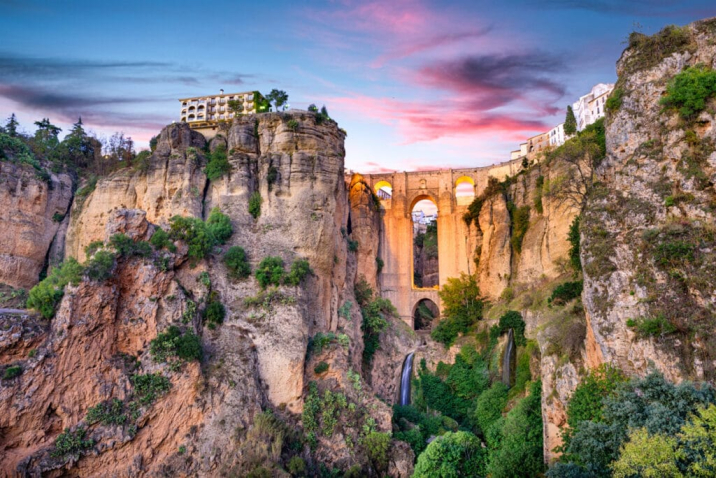
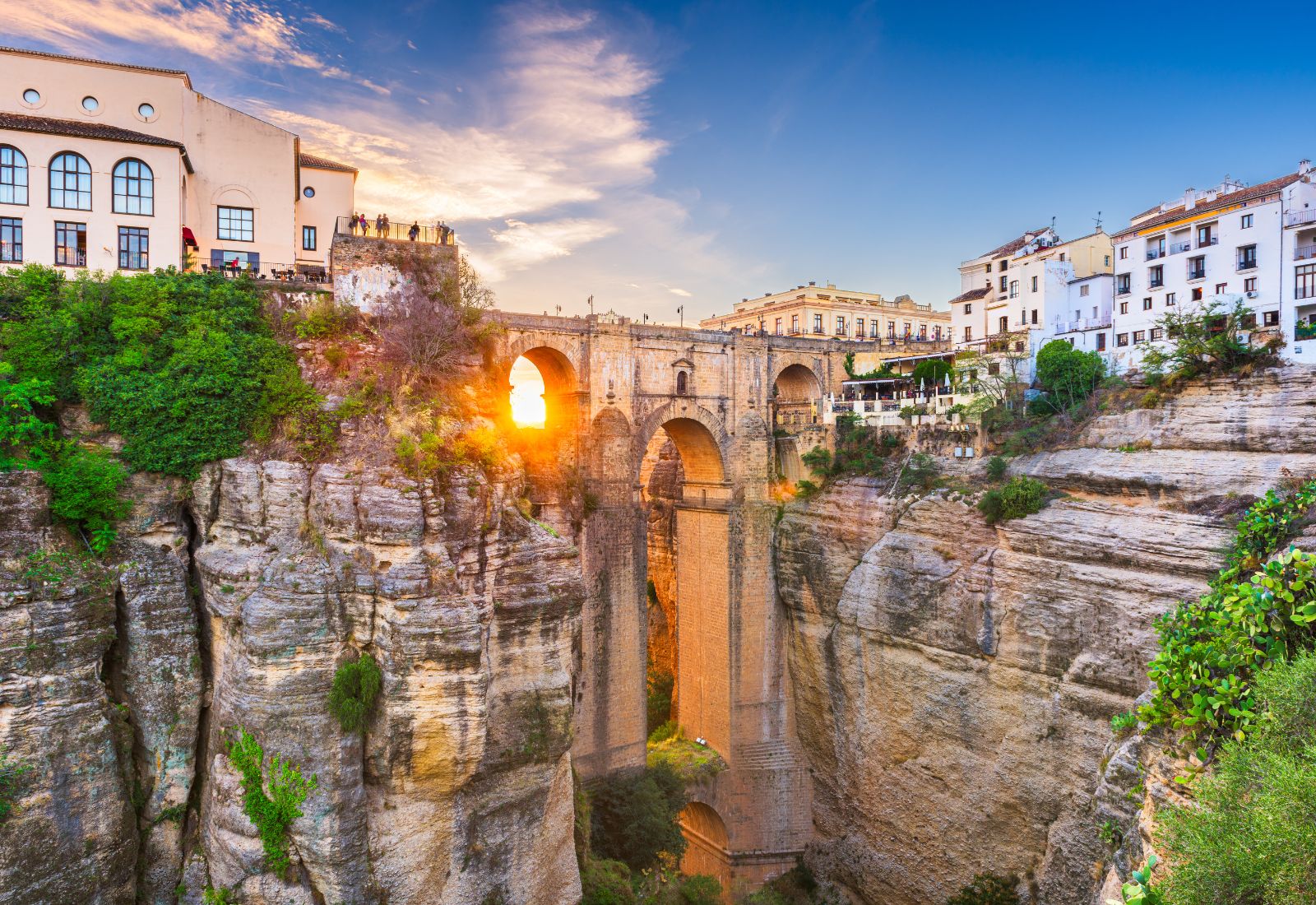
Ronda is split in two by a gorge a hundred metres deep.
The town has been there since Roman times, and the bridge joining its two halves took forty-two years to build. Around it lie the villages that gave Andalucía the name pueblos blancos — and some of them are stranger than Ronda itself.
Ronda alone is straightforward to reach. The villages are not, and that single fact decides how you plan the day.
In short
- —About 130 km from Seville, an hour and three quarters each way by road.
- —The Puente Nuevo was finished in 1793, after forty-two years of building, and spans ninety metres.
- —Ronda sits 750 m above sea level — cooler than Seville, noticeably so in winter.
- —The villages need a car or an organised tour; buses between them run once a day at best.
01
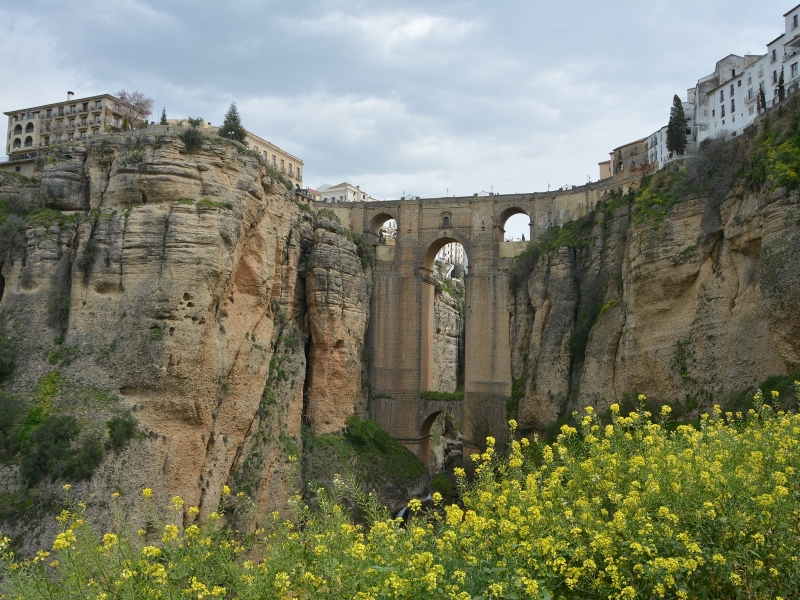
Puente Nuevo and the gorge
The bridge was completed in 1793 after forty-two years of work. It spans ninety metres across the El Tajo gorge, with the river Guadalevín that cut it running below.
Do not just walk across it. Take the path down on the north side and you see it from underneath, which is where the photographs come from. Allow twenty minutes down and thirty back up.
During the Civil War prisoners from both sides were thrown from the bridge. Hemingway wrote about it in For Whom the Bell Tolls, drawing on real events in Ronda.
02
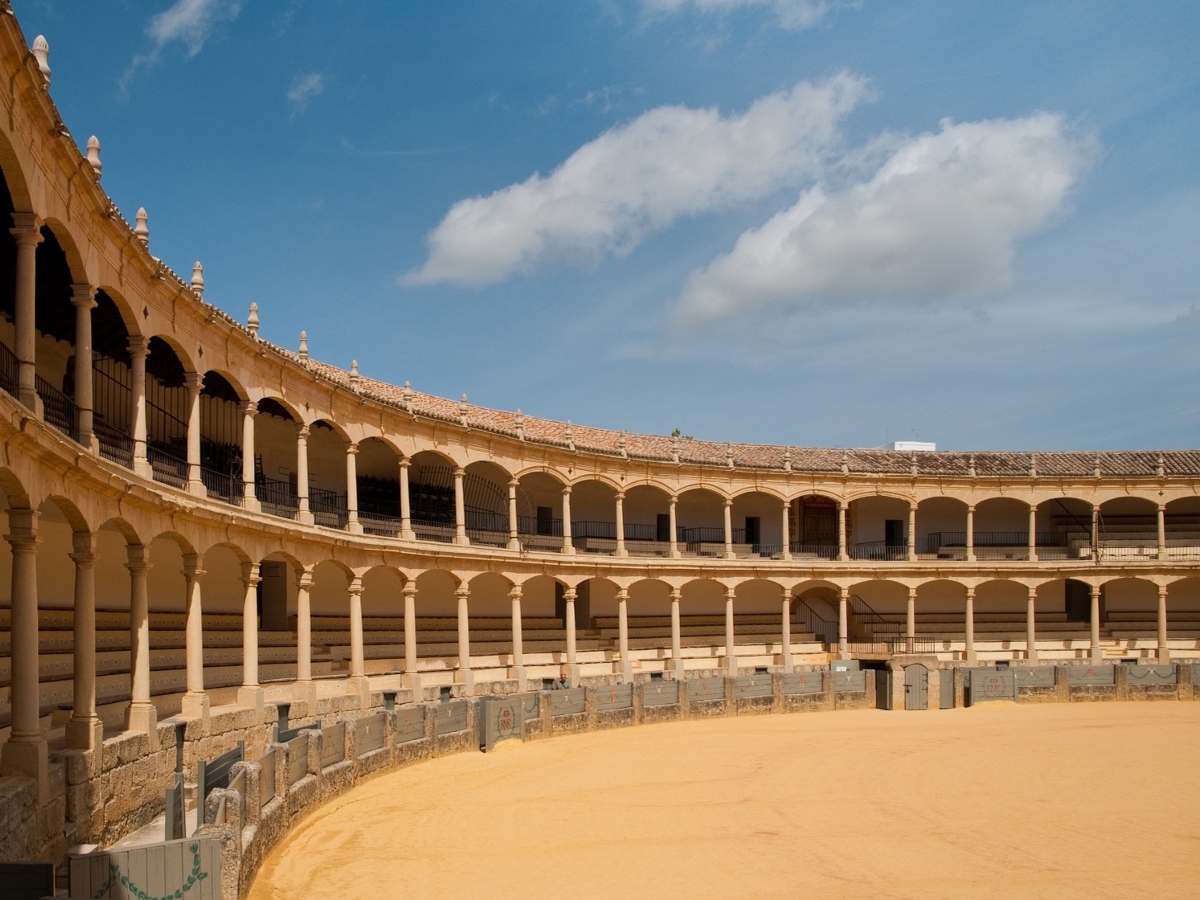
Plaza de Toros — Spain's oldest ring
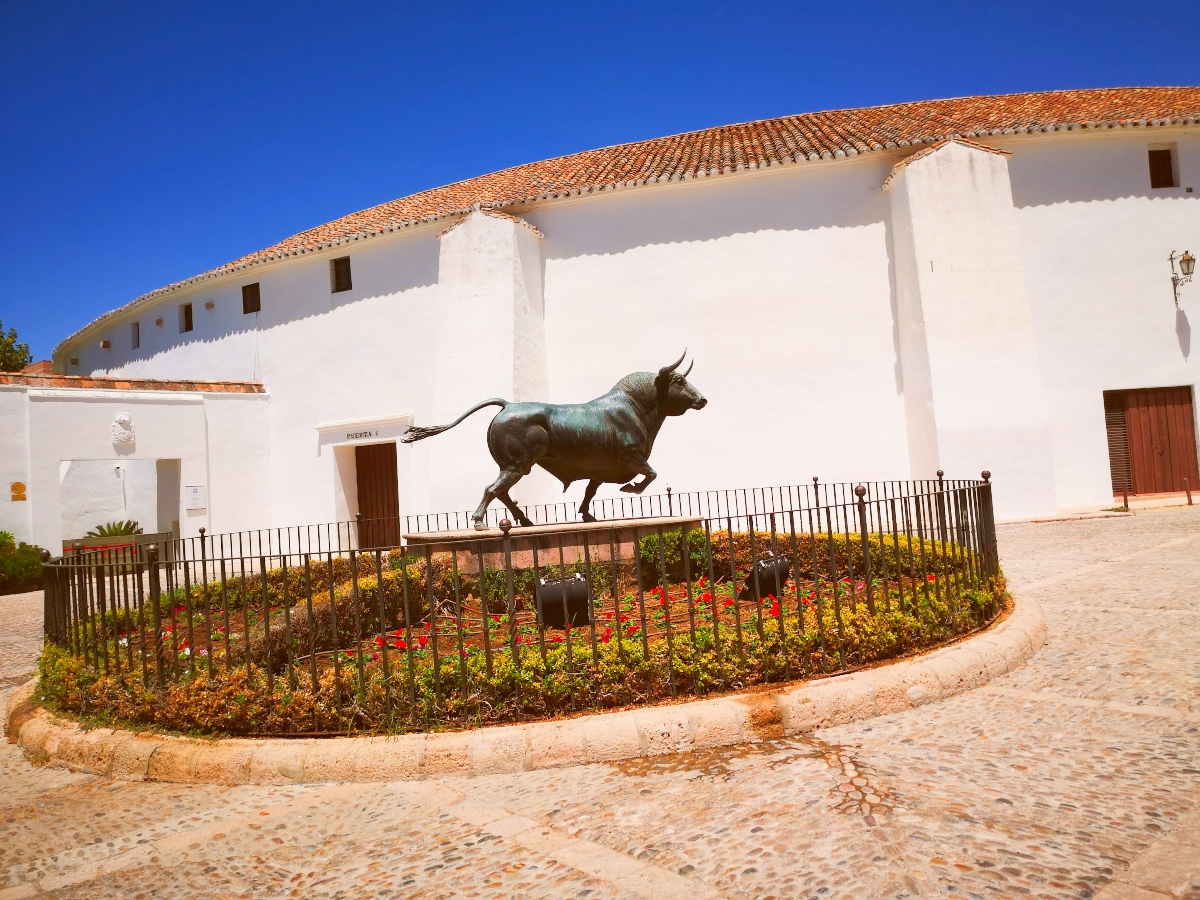
Built in 1785 and still used a handful of times a year. It was in Ronda that bullfighting as it is known today began — on foot rather than on horseback — with Pedro Romero. The ring is open as a museum, which lets you walk out onto the sand itself.
03
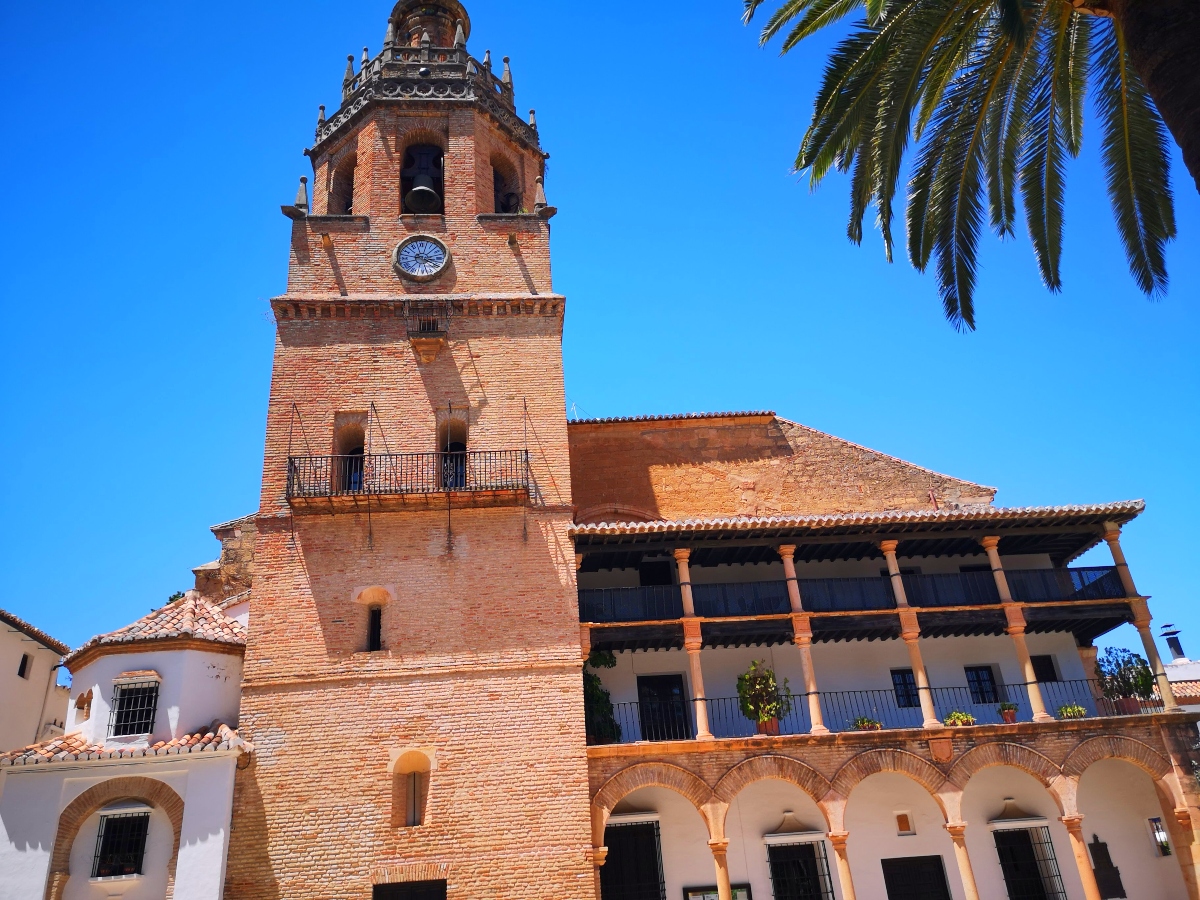
La Ciudad, the Moorish quarter
The gorge divides the town. North of the bridge is El Mercadillo, holding the bullring, the shops and most of the town. South of it is La Ciudad, the Moorish quarter — the oldest part, and the one many visitors cross in a quarter of an hour without going into.
Here are the Palacio de Mondragón, the thirteenth-century Arab baths, and the church of Santa María la Mayor built directly over the mosque, its minaret still standing as the bell tower. Quieter than the north side, and where most of the day trippers do not go.
04
Museo Don Bosco
An early twentieth-century villa built in modernista style with tilework and stained glass, run today by the Salesians. The house is worth a look, but the garden is what people come for.
Its terraces sit right on the edge of the drop, looking out over the Serranía de Ronda and the mountains behind. It is the best view in town that you can sit down and take in slowly, without the crowd. Entry is cheap and the money goes to the Salesians' work with children. Allow twenty minutes; it is a few minutes' walk from the bullring.
05
Setenil de las Bodegas
The strangest of the villages. The houses are built in under an overhanging cliff, so the rock itself is the roof and whole streets lie in the shade of stone. It was not done for effect — using the rock was cheaper than building a roof. The village has been there since the fifteenth century.
06
Zahara de la Sierra
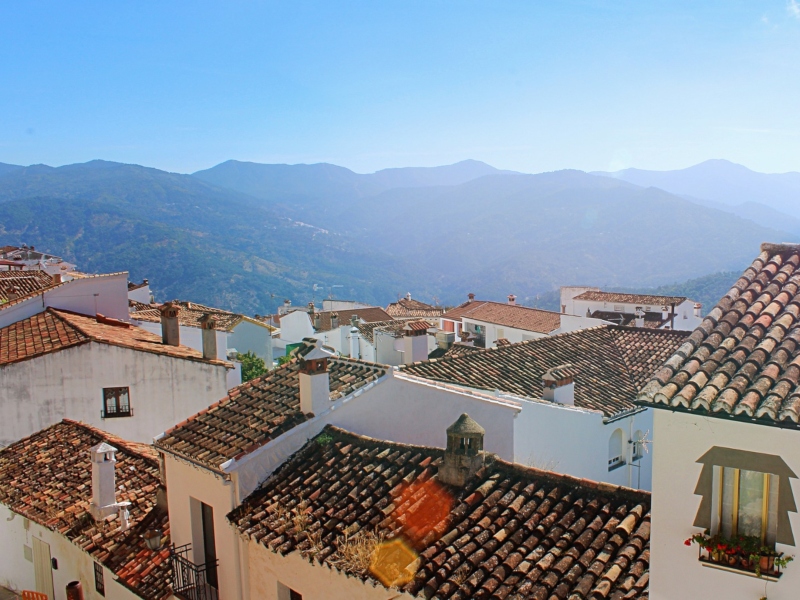
White houses stacked in a steep cone beneath a ruined Moorish castle, with a turquoise reservoir below. This is the image people have in mind when they say white village. The castle was taken by Christian forces in 1483, and that was the act that triggered the final campaign against Granada.
07
Grazalema
Set inside the natural park of the same name, and the wettest place in Spain. That is why these mountains are green rather than brown. It is a good base for walking, and known for its woollen blankets and its goat's cheese.
08
The wine of Ronda
Winegrowing has returned to the area over the last twenty years, having lain dormant since the nineteenth century. The altitude gives cool nights and fresher, more acidic wines than the rest of Andalucía. Several of the bodegas take visitors, which is easy to add if you have a car.
At the table, the mountain food here is heavier than in Seville: more meat, less fish. Order rabo de toro, the oxtail stew that is the town's dish, wild mushrooms if you are there in October or November, chorizo and cheese from Grazalema, and payoyo, the goat's cheese from these mountains that you find everywhere in the area.
Getting there, and why the villages need a car
To Ronda alone there is a train from Seville Santa Justa. It takes around three hours and runs through the mountains — one of the most beautiful rail journeys in Spain — but there are only two or three departures a day, so check the return before you set out. The Damas coach takes two and a half hours from Plaza de Armas. By car it is an hour and three quarters, the last forty kilometres of it winding mountain road.
The villages are the part that decides the day. Ronda you can reach on public transport; Zahara, Grazalema and Setenil you cannot. Between them there is one bus a day, in some cases none, and they do not connect with each other. Seeing Ronda plus two or three villages in a day means a car or an organised trip. Self-driving, the route Seville–Zahara–Grazalema–Ronda–Setenil and back is around five hours of driving in total.
Ronda fills between eleven and four. Arrive early or stay into the late afternoon and you have the bridge close to yourself. We can also arrange the day privately, with a driver, at whatever pace suits — two villages and a long lunch is a better day than four villages and a schedule.
Mistakes worth avoiding
- —Only walking across the bridge. The view from underneath is the one people remember — take the path down.
- —Expecting to reach the villages by bus. It cannot be done in a day.
- —Arriving in the middle of the day, when the bridge is packed between eleven and four.
- —Dressing as you would in Seville. At 750 m it is ten degrees colder in winter, and windy all year.
- —Wearing sandals into the gorge. The path is steep and loose with gravel.
Frequently asked questions
{{ f.q }}+
{{ f.a }}
Written by
Gunvor Guttormsen
Licensed tour guide · Seville
Gunvor is an officially licensed guide based in Seville and the founder of Flavors of Andalucia. She guides in English and Norwegian, and also in Swedish and Danish, and has spent years walking the markets, bodegas and back streets she writes about here.
More about Gunvor